






Let us help you find what you’re looking for


13 Feb 2026
A historic gift of $135 million from the Estate of Khoo Teck Puat is enabling new possibilities in 10 distinct domains including AI diagnostics, community wellness and nature-based medicine, potentially reshaping how we deliver care.
When SingHealth received the largest philanthropic gift in its history and the largest ever made to any Singapore public healthcare institution, it was not just the scale of this generous gift that was striking. The donation from the Estate of Khoo Teck Puat represents something far more significant: the culmination of a visionary's lifelong commitment to transforming lives through bold investments in human potential.
Mr Khoo Teck Puat was a man who saw possibilities where others saw obstacles. Born in 1917 in Singapore, he began his extraordinary career as a 16-year-old clerk at OCBC, eventually rising through the ranks to become the single largest stakeholder of Standard Chartered Bank, a prominent businessman, and an investor with interests in banking, hotels, property development and other sectors.
His philanthropic vision was similarly ahead of its time. Rather than simply donating, Mr Khoo invested in creating new possibilities. He established the charitable Khoo Teck Puat Foundation in 1981, actively championing causes that met or anticipated society’s evolving needs.
Mr Khoo's legacy continues with this unprecedented philanthropic investment in SingHealth, Singapore's largest public healthcare cluster, to push the boundaries of medicine and unlock breakthroughs across 10 revolutionary areas of healthcare advancement, each deliberately chosen to reflect the kind of transformative thinking that defined Khoo's approach to business and life. Ms Mavis Khoo, Trustee of the Estate of Khoo Teck Puat, explained that the gift reflects a deep belief in the potential of medical research, innovation and education to transform lives. “We are pleased to have this opportunity to partner SingHealth to shape a healthier future and expand what is possible in care and discovery. This gift is our way of honouring his legacy by supporting advancements in healthcare, which was a cause close to his heart, and enabling access to exceptional healthcare for future generations of Singaporeans.”
We highlight four key areas this gift will transform.
Redefining Healthcare Beyond Hospital Walls
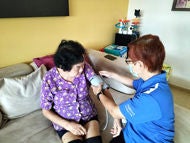
Healthcare is undergoing a fundamental transformation from treating disease to cultivating wellness to prevent disease. SingHealth Community Hospitals' designation as the world's first World Health Organization Collaborating Centre for Social Prescribing signals this paradigm shift – one that recognises health is created beyond the hospital and in communities, not just clinical settings. Social prescribing represents a revolutionary approach to patient care. Instead of prescribing only medications, patients are connected to community resources, like exercise programmes, community arts and taiji groups, and holistically forms an integrated care plan. Emerging evidence has shown these interventions can potentially prevent costly hospital readmissions while improving quality of life in that biomedical approaches alone cannot achieve.

Social prescribing activity at Outram Community Hospital.
The gift will also scale SingHealth's innovative HEAL[i] Labs model, where researchers work directly in communities. This real-world, immersive approach enables rapid testing and refinement of interventions, reducing the time from hypothesis to implementation. Predictive analytics will identify high-risk individuals before they develop serious conditions, enabling early targeted interventions that could substantially reduce the burden on hospital services.

CAPE Project in action in the community adopting the HEAL Labs approach.

Artificial Intelligence Meets Human Biology
Medical diagnosis stands at the threshold of an AI revolution that promises to enhance human capabilities in unprecedented ways. SingHealth's pathology services already serve as a regional reference centre, but AI integration will revolutionise diagnostic precision and speed across multiple medical disciplines.
Microbial genomics illustrates this transformation's potential. Current methods such as traditional blood cultures can miss infections that AI-powered genetic analysis detects within days. For critically ill patients, this speed difference can determine survival. The technology doesn't replace human expertise but amplifies it, enabling pathologists to identify patterns across vast datasets that would be impossible to process manually.
Fungal infections are challenging to treat and can cause high morbidity and mortality in immunocompromised populations. Limited diagnostics and a shortage of mycologists, pose additional challenges to this field, as mentioned in the WHO's first-ever fungal priority pathogen list. AI systems trained on thousands of cases can achieve 80-85 percent diagnostic accuracy for medically important fungi, effectively reducing delays in treatment that currently cost lives.
The pharmacogenomics programme represents personalised medicine's practical application. Rather than the traditional trial-and-error approach to prescribing, genetic testing predicts how individual patients will metabolise specific medications. This precision prevents adverse reactions while ensuring therapeutic effectiveness from the first prescription—a significant advancement for patients with neurological, cardiovascular and thyroid conditions.
Digital pathology integration across SingHealth's network will create something unprecedented: instant access to subspecialist expertise regardless of location. A patient at any SingHealth facility can access the same level of diagnostic precision, democratising access to the highest quality care and eliminating geographical barriers to expert medical opinion.

AI-enabled digital pathology system supporting high-precision slide analysis and streamlined diagnostic workflows.

Innovative AI solutions to identify fungal species with 80 to 85% accuracy in reduced timeframes, allowing for faster patient diagnosis and treatment.

AI-augmented tools enhance diagnostics by analysing microbial genomes to detect patterns beyond manual review. By sequencing priority pathogens locally, our models enable accurate metagenomic diagnostics and early outbreak detection.
Nature's Pharmaceutical Laboratory
The SingHealth Duke-NUS Institute of Biodiversity Medicine aims to establish Singapore as a global leader in plant-based therapeutic discovery by attracting world-class scientific talents in cutting-edge technologies including AI and Machine Learning to drive breakthrough discoveries. The goal is to accelerate drug discovery by integrating the comprehensive Biodiversity Atlas of Local Plants and Medicinal Compounds database with advanced extraction technologies.

The SGH Rooftop Herbal Garden is a therapeutic, sustainable, and educational space located on the hospital campus. It features a medicinal herb garden, an aquaponics system for food production, and is used for patient rehabilitation.
By combining unique plant genomic data with human cancer datasets, researchers can target cancer and chronic disease treatments to potentially improve diagnostic precision and patient survival rates. The gift will enable the establishment of end-to-end innovation pipelines that translate biodiversity insights into clinically proven therapeutics, preventive interventions and wellness applications.
Beyond clinical discovery, this lays the groundwork for conservation by systematically capturing the genomic blueprints of regional plant species. As climate change, environmental transformation and ecological pressures intensify, gaining knowledge that anticipates how regional plant species respond will empower the scientific community and the public to make informed decisions to protect biodiversity.
Empowering Allied Health Professionals
Healthcare transformation requires investing in leadership at every level. Allied Health Professionals (AHP) across SingHealth's network—close to 5,000 specialists from more than 30 diverse professions—represent a critical segment driving healthcare innovation. This gift will develop visionary AHPs who are recognised as experts at the national and global level, capable of transforming rehabilitation, diagnostic and therapeutic services that restore and maintain patients' independence and quality of life. Nurturing AHP leaders through advocacy and role-modelling will raise the bar of excellence across the different AHP professions, impacting preventive care capabilities that advance population and community health initiatives and drive novel patient care approaches.
Convergence and Transformation
The gift will also advance research in clinical specialties including mental health, maternal and child health, transplant medicine, cardiovascular sciences, and oncology. By augmenting the collaborative research ecosystem in SingHealth, this gift will go one step further by enabling breakthroughs from one area of medicine to accelerate progress across others.
This convergence extends beyond SingHealth's walls. Digital pathology networks share diagnostic expertise globally. Community health models become templates for other healthcare systems. Biodiversity research contributes to international pharmaceutical development. Leadership programmes nurture a new generation of healthcare innovators who will drive change throughout their careers.
A Visionary's Lasting Impact
This impetus for this historic gift aligns perfectly with SingHealth's vision of defining tomorrow's medicine. At its heart, this landmark gift echoes our core purpose: putting patients at the heart of all we do. Whether it's bringing rehabilitation therapy directly to patients' homes, ensuring instant access to specialist diagnostic expertise regardless of location, or developing treatments that work through multiple biological pathways with fewer side effects, every innovation made possible by this gift serves a singular goal: better outcomes and experiences for the patients who trust us with their health.
The late Mr Khoo's legacy now unlocks the potential for the brightest healthcare professionals to turn today's medical challenges into tomorrow's breakthroughs. Through this gift, we define tomorrow's medicine and ignite hope for discoveries that will touch and transform lives.

The Estate of Khoo Teck Puat with President Tharman (centre front), Minister for Health Mr Ong Ye Kung and SingHealth leadership at the gift ceremony held 13 Jan 2026.
Cover video credits: NTUC Health Active Ageing Centre (Redhill), Youth Corps Singapore, Dementia Singapore and the Community Psychogeriatric Programme team from Changi General Hospital
2 [i] Healthy, Empowered Active Living
Stay Healthy The Easy Way

Get trusted health advice, offers and more.
Stay Ahead in Healthcare Industry

Subscribe to our exclusive updates for healthcare professionals.















Keep Healthy With
 HealthXchange
 Health Videos
Follow SingHealth


© 2026 Singapore Health Services Pte Ltd. All Rights Reserved.