




Let us help you find what you’re looking for


22 Jul 2025
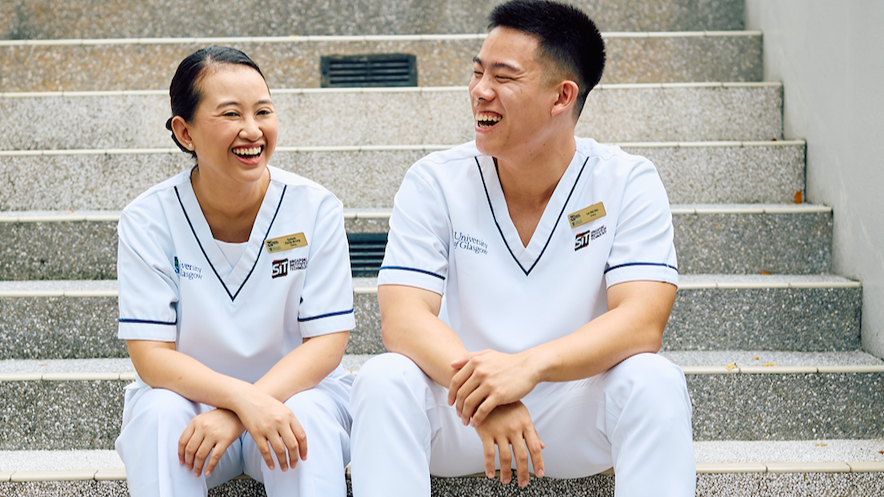
Six SingHealth-sponsored nursing students share what drives them to shape the future of nursing care.

Joseph Pang Seng SoonJoseph Pang Seng Soon, Year 3 Student, National University of Singapore, Clinical placement at Sengkang General Hospital
A talk by the founder of the Yellow Ribbon Project, Mr Jason Wong - Founder Yellow Ribbon Project and Dads for Life, during my time in junior college sparked my interest in an unconventional career path. His sharing about making meaningful change in people‚s lives resonated deeply with me. Choosing to be a nurse was not a decision I made lightly — it came after carefully evaluating my strengths and what I wanted to achieve in life. While there were other healthcare paths available, nursing stood out because of its emphasis on building genuine relationships with patients. I wanted a career where I could make a real difference through building personal relationships, and nursing offered exactly that — meaningful patient interactions.
I chose to study locally at the National University of Singapore (NUS) to understand our healthcare system better. I was fortunate to be awarded an MOH Holdings (Singapore) (MOHH) scholarship. With this scholarship, I gained access to unique opportunities — from dialect classes to overseas experiences at King's College London.
Most of my student attachments have been at Sengkang General Hospital (SKH). This consistency has been invaluable, allowing me to gain comprehensive exposure to various nursing specialties. The supportive environment at SKH has allowed me to build strong relationships with both staff nurses and patients. This stable learning environment has helped me develop my clinical skills more systematically and understand the hospital‚s integrated care approach. My long-term aim is to practise community nursing, so I‚m taking a Minor in Public Health to understand the healthcare system better.
My perception of nursing has definitely changed since enrolling in NUS Nursing. I thought nurses only cared for patients and followed doctors‚ orders. I've realised that a nurse‚s primary function is to have patients‚ best interests at heart, to advocate on their behalf to the healthcare team, especially when they are unable to do so. My role in the SingHealth Nursing Student Council has deepened this understanding further. As a bridge between senior management and students, we advocate for nursing students‚ needs and create opportunities for professional growth. These experiences — from bedside care to student leadership — have shown me that nursing is not just about following a career path; it‚s about creating positive change at every level, whether for a patient or for the future of healthcare.

Sofia Andrea Trinidad Samson, Final-Year Student, Ngee Ann Polytechnic, Clinical placement at KK Women’s and Children’s Hospital
I chose Ngee Ann Polytechnic's nursing diploma, and I've been enjoying my clinical attachment at KK Women's and Children's Hospital (KKH), which has been eye-opening. In the paediatric ward, I've learned that caring for young patients requires a special touch. The nurses here showed me how to balance technical skills with a gentle approach, especially when dealing with children. Through these experiences, I've gained a deeper appreciation for paediatric care and the importance of making young patients feel safe and understood.
Another valuable experience during my KKH attachment has been observing family-centred care in action. Watching experienced nurses interact with both patients and their families has taught me the importance of clear communication and emotional support. I've learned that paediatric nursing isn't just about treating the child — it's also about supporting the entire family unit through the journey. These observations have enabled me to develop a more holistic approach to patient care.
Being naturally shy and introverted, I initially struggled with patient interactions during my clinical attachments. However, the mentors I met along the way helped transform this challenge into strength. During my attachment at KKH, I had both supportive preceptors and mentors who encouraged me to find‚ my voice. They showed me that effective nursing isn't about being the most talkative person in the room — it's about being compassionate, attentive and willing to advocate for our patients. Their guidance gave me the confidence to speak up when needed, while staying true to my empathetic nature.
Before my nursing course, I viewed nurses as primarily providing bedside care. However, through my clinical attachments, I've come to realise that being a nurse goes far beyond that, and requires critical thinking skills, leadership qualities, and a collaborative spirit. My education journey has deepened this understanding, helping me view patients more holistically and connect with them more meaningfully.
I hope to pursue a degree and specialise in paediatric or neonatal nursing. While my mother's work as a paediatrician may have influenced this choice, my clinical experiences have confirmed my passion; there's nothing more rewarding than being part of a child's recovery.

Syuhada Chong Jia Ling, Final-Year Students, Singapore Institute of Technology, Clinical placements at Singapore General Hospital
After spending time in public relations managing corporate communications and media campaigns, followed by several years in the pre-school education sector, I had built a stable career. Yet I couldn't shake my childhood dream of making a direct difference in people's lives through healthcare. The decision to switch to nursing wasn't easy — I'm the sole breadwinner and caregiver for my elderly father. Walking away from a steady income and starting over meant careful financial planning and reimagining my entire professional trajectory. I applied for the nursing programme without telling anyone, not wanting to second-guess myself. When I got in, I was relieved to find out that my family was genuinely supportive!
Going back to school brought its own set of challenges. While my previous degree qualified me for admission into the Diploma in Nursing (Accelerated) programme, allowing me to complete the diploma in two years instead of three, the adjustment was significant. I had to relearn how to study, manage tight deadlines, and adapt to being a student again. My communications background proved unexpectedly valuable — years of distilling complex information helped me approach my studies strategically, and I eventually made it to the Director's List.
After completing my diploma, I worked in Sengkang Community Hospital (SKCH). I had expected to be rehabilitating patients, but the hospital decided to open a dementia ward, so there was a new set of skills to learn. I got to plan activities — such as organising movie screenings and karaoke sessions — to keep the dementia patients engaged. What I found useful were the weekly meetings with other staff — such as doctors, medical social workers, and allied health professionals like physiotherapists and occupational therapists — because they showed me that patients have to be cared for holistically.
After three years of practice, I was ready for the next step. My nursing managers encouraged me to pursue a full-time degree — advice I'm grateful for. The two-year nursing degree programme jointly offered by Singapore Institute of Technology (SIT) and University of Glasgow was perfect for my needs, and their Overseas Immersion Programme (OIP) in Glasgow offered valuable perspective on different healthcare systems. I was also fortunate to be awarded a SingHealth sponsorship for my degree programme at SIT. It was a load off my mind to know that a portion of my course fees was covered by the sponsorship.
Lau Kah Onn, Final-Year Student, Singapore Institute of Technology, Clinical placement at National Cancer Centre Singapore
My journey into nursing began with my grandmother, who cared for me when I was young. Watching her struggle with dementia sparked a deep desire to understand healthcare from the ground up.
This commitment to help others grew stronger over time. As a student, I volunteered for a Youth Expedition Project to rural Cambodia, where we helped to set up a new operating theatre in one of the local hospitals serving underprivileged communities. I learned firsthand how healthcare access affects lives, and these experiences shaped my perspective on what meaningful care looks like. While studying medicine was my initial goal, discovering nursing opened unexpected doors. I realised nurses have something unique: They are there with patients through every step, building real and honest relationships.
My journey took me from Ngee Ann Polytechnic to Singapore Institute of Technology's accelerated degree programme, where I had the opportunity
to go for an exchange programme at the University of Glasgow. I spent three weeks with the UK's National Health Service, where I witnessed a model of care in which nurses had the autonomy to make complex clinical decisions and partner doctors to shape treatment plans. It opened my eyes to the potential of nursing.
Back in Singapore, theory met reality during my pre-registration practice at Singapore General Hospital. In the haematology ward, I found mentors who did more than teach procedures. They challenged me to think critically and translate classroom knowledge into meaningful patient care. There, I learned that providing good care is not just about following protocols — it's also about having the knowledge and confidence to propose better solutions.
Now doing my clinical placement‚ at the National Cancer Centre Singapore, I m tackling new challenges daily. Working with young cancer patients puts things into perspective. The work is complex, sometimes daunting, but deeply meaningful. I'm grateful for a supportive learning environment at SingHealth. Despite their busy schedules, colleagues here take time to review cases with me and encourage me to apply theoretical knowledge in practical situations.
Moving forward, I'm keen to address nurse burnout. I hope to pursue the management track and work on improving workflow and shift allocation. But more than that, I want to challenge the idea that nurses are just cogs in the healthcare machine. We're on the frontlines, seeing what works and what doesn't. That puts us in a unique position to drive positive change.
My advice to future nurses? Don't just accept the status quo. Your perspective matters. If you see a way to improve patient care, speak up. That's how we move healthcare forward.

Mohamad Ashrin, Final-Year Student, Nanyang Polytechnic, Clinical placement at Sengkang General Hospital
My journey into healthcare was inspired by two remarkable women: My mother and aunt. My mother is a physiotherapist assistant in a psychiatric nursing home, and my aunt is a nurse in the Orthopaedics/Surgery Department of Changi General Hospital. I was inspired by my aunt when she was studying for her Master's degree. Being a science nerd, I was impressed by her clinical knowledge! But, really, seeing my mother and my aunt advance in their careers — especially my aunt, who is an Advanced Practice Nurse — and hearing their accounts of patient care helped me envision nursing as an exciting path for myself.
After careful research, I decided to enrol in Nanyang Polytechnic for my nursing diploma because of its strong focus on research and innovation. The programme equipped me with crucial skills in data gathering and interpretation — capabilities I know will be valuable throughout my nursing career.
During my clinical rotations, I was attached to various departments in Sengkang General Hospital, from general surgery to cardiology. In fact, my final attachment was in the cardiology medical ward, which I really enjoyed because I am a bit of an adrenaline junkie, and I was fascinated by equipment like the electrocardiogram (ECG), which records the electrical activity of the heart to detect heart conditions. This experience sparked my ambition to pursue research in cardiology, with plans to further my studies and obtain a degree. The module on disease management especially resonated with me; learning about symptoms, medications, and how to extract crucial information from patient histories felt like solving complex puzzles.
The SingHealth sponsorship has been transformative, allowing me to focus fully on my studies instead of juggling it with part-time work. I'm also part of the SingHealth Nursing Student Council, where I serve as secretary. Joining it has opened major opportunities for me! The council bridges the gap between nursing students and management, helping students navigate the system and find answers to their queries. Through council-organised talks and conferences, we help students broaden their horizons and prepare better for clinical attachments. Access to SingHealth's extensive nursing resources, especially in disease and patient management, has made me feel more confident during my clinical rotations.
As I graduate, I can truly appreciate how this journey has shaped my understanding of nursing. While technical skills are crucial, I've learned that compassion forms the foundation of healthcare. It's a must for anyone who wants to work in healthcare. I'm also passionate about mental health, particularly the need for better mental health support for nurses. While we guide others to better health, we sometimes forget to care for ourselves. I believe creating dedicated counselling services where nurses can speak openly would make a real difference in our profession. Supporting nurses‚ well-being is not just about individual care — it helps retain passionate healthcare workers and builds a more resilient nursing community. After all, when nurses are well-supported, we can provide even better care for our patients.

Cheah Sit Lee, Year 1 Student, ITE College East, Singapore National Eye Centre
After nearly two decades in nursing, most would have settled comfortably into their role. But for me, 19 years of experience only fuelled my desire to do more. Working at Singapore National Eye Centre (SNEC) with pre- and post- surgery patients, I saw opportunities to expand my capabilities beyond what I could do as a Senior Enrolled Nurse. That's what drove me to pursue further education at this stage of my career.
I'm thankful that SNEC saw my potential and encouraged me to apply for ITE College East's Work - Study Diploma in Nursing. This is a stepping stone for me to become a Registered Nurse (RN), which will allow me to do much more than as a Senior Enrolled Nurse (EN). I hope to specialise in ophthalmic nursing in the future. SingHealth‚s sponsorship was also an unexpected blessing — coming from a humble family, the financial support means everything.
Although I'm already an experienced EN, going back to school wasn't an easy decision. I was initially worried about managing study time alongside work commitments. But the Work-Study Diploma programme's structure has helped ease these concerns. During academic terms, I focus entirely on my studies; when term ends, I return to the ward either as a RN trainee or resume my EN duties.
Now attached to Singapore General Hospital's Internal Medicine ward, I navigate dual roles as both student and nurse. Being a student with work experience helps — I understand my priorities clearly. When I‚m on duty as an enrolled nurse, I focus entirely on patient care; during student hours, I concentrate on learning.
I've always enjoyed the practical side of nursing, whether it's performing wound dressings, assisting with procedures, or conducting eye screenings. One of my favourite modules so far is Applied Clinical Science, where we learned essential hands-on skills like tracheostomy care and nasogastric tube insertion. These practical experiences have deepened my ability to provide comprehensive patient care.
Over the years, my understanding of nursing has evolved far beyond my initial impression of basic patient care. Today's nurses need sharp critical thinking skills and quick situational assessment abilities. The integration of technology, especially AI, has transformed healthcare significantly since I first started nearly two decades ago. ‚
To nurses considering further education: There s always room to grow. Every step forward opens new possibilities. For me, this journey leads back to my passion for ophthalmic nursing, where I hope to make an even bigger difference in patients‚ lives. Through it all, my goal remains unchanged — to be remembered as a caring, dedicated and competent nurse who always puts her patients first.
Stay Healthy The Easy Way

Get trusted health advice, offers and more.
Stay Ahead in Healthcare Industry

Subscribe to our exclusive updates for healthcare professionals.














Keep Healthy With
 HealthXchange
 Health Videos
Follow SingHealth


© 2026 Singapore Health Services Pte Ltd. All Rights Reserved.