





Let us help you find what you’re looking for


07 Jul 2025
Sometimes, the best medicine isn't in a pill bottle; it's in how we treat each other as human beings.
Picture being in hospital when you notice a grieving couple who has just lost a loved one. A healthcare professional tries to help them, but to you, his questions seem too abrupt and his behaviour too direct for such a delicate situation. As the couple’s distress becomes magnified, you share their frustration and wonder: Why isn’t the medical staff showing more compassion?
There's another side to this story. Healthcare workers often feel exhausted from the heavy workload and sometimes even experience abuse from frustrated patients and families. "Showing empathy throughout demanding shifts is something all healthcare workers strive for, though this isn't always easy," says Keith Tan, a Master Medical Social Worker at Singapore General Hospital.
Healthcare is inherently a humanistic endeavour, and we are constantly reminded that there are always two sides to a story.
To help other healthcare workers acknowledge these different perspectives and better manage challenging experiences on the ground as well as reflect on their own interactions with patients and caregivers, the SingHealth Duke-NUS Medical Humanities Institute’s (SDMHI) has introduced the concept of Experiential Theatre Conversations (ETC).
Shining a light on new perspectives with theatre
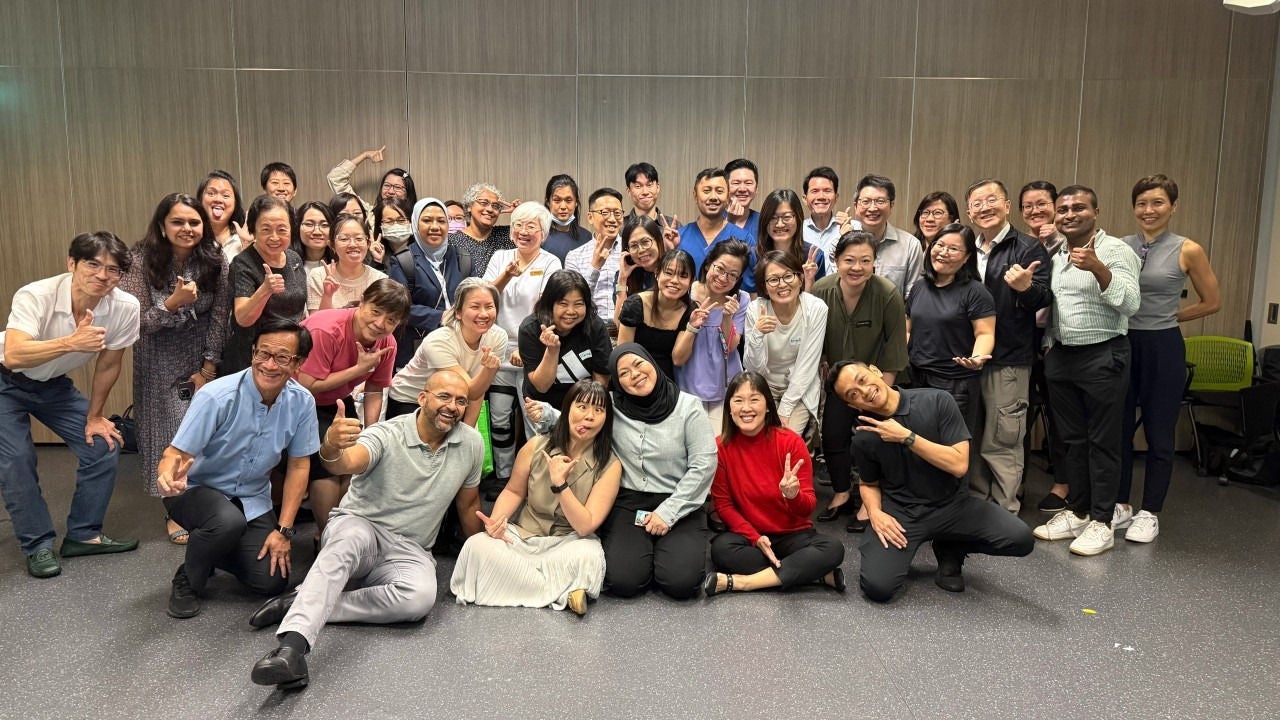
Held in January 2025, ETC saw professional actors take the stage and depict patients and caregivers at the emergency department who do not receive individualised care.
These scenes were developed through interviews with SingHealth employees, including those from SDMHI, to ensure accuracy and relatability to the audience. After each scenario, the audience, comprising SingHealth staff, were asked to share their thoughts, feelings and reflections in response to the scenes.
 Through ETC, invited healthcare workers were given the opportunity to put themselves in the shoes of their colleagues and patients as they explore deeper conversations beyond surface-level judgements. There were also many points of reflections to address their personal biases and assumptions as ETC empowered them to widen their perspectives.
A curtain call for empathy
ETC may be an unconventional mode of training for healthcare staff, but Teck Chuan Voo, Head, Office of Ethics in Healthcare, SingHealth, and Bioethicist, SDMHI, believes that it is essential so as to raise the standards of care, especially with manpower constraints and the need to manage the challenges of a rapidly ageing population.
In his experience, conflicts in the care settings can arise for many different reasons including a patient’s past experience, the way healthcare professionals communicate, and what they do not convey.
To strengthen trust, improve patient care, and enhance the wellbeing of healthcare workers, it is important to understand diverse viewpoints that different people might have about the same incident, to empathise with those involved and ultimately, foster a strong culture of compassion in SingHealth.
This is where ETC — what Teck Chuan refers to as a type of “humanities thinking”—comes in. “I believe through ETC, we can facilitate clinician-patient relationships where we talk and care for one another on an equal footing, as fellow human beings who are vulnerable to the pain of suffering and frailty,” he said.
Setting the stage for tough conversations
How does ETC achieve this, one may ask.
According to Serene Chen, one of ETC's lead performers and facilitators, there are two main ways. Firstly, it gives “battle-worn” healthcare workers, who are often too caught up with the burden of having to complete endless tasks, the much-needed time to take time out to pause and reflect.
Secondly, compared to traditional workshops where participants are passive recipients of information, at ETC, they are encouraged to speak up. They are given a chance to be heard, and in doing so, gain new insights and perspectives of others.
The theatre atmosphere also helps, Serene adds. “The spirit of storytelling is a powerful one as the audience is caught up with the emotions of the characters, after which wisdom tends to emerge.”
Teck Chuan agrees. “ETC puts us in a reflective mood so we can consider how we can think of ways to bring about better care for patients, their families, our own families, ourselves and our colleagues,” he affirms.
“This is not something that standardised patient training or case discussions can easily create,” he adds.
Motivated to script better care
It may have been SingHealth’s first attempt at ETC, but both Teck Chuan and Serene share that the responses have been extremely encouraging. In fact, despite some awkward moments, Serene was pleasantly surprised at how candid participants’ comments were and how much they cared for both their patients and colleagues.
For Keith, it felt like a “safe platform” for healthcare workers to learn about the different emotions that the various parties may feel, and raise issues that they face to gather feedback from other participants on how best to handle challenging situations.
The discussions also shed light on the high demands on healthcare staff and the impact on attrition rates. Despite the challenges of their work, most staff indicated they would love to be empathetic and be able to show care. Importantly, it helped him understand when processes and protocols can take a backseat, and where the need for compassion should be dialled up.
The Singapore Medical Humanities Conference (SMHC) 2025 themed "Nurturing the Human Connection: Caring for Both Healer and Patient" will take place on 17-18 October at Academia. It brings together healthcare and arts communities to explore how humanities and creative practices enhance healthcare delivery and medical education. It shows how artistic and humanistic approaches can strengthen patient care, improve clinical communication and support our healthcare professionals' development. For further information, contact medicalhumanities@singhealth.com.sg.
Stay Healthy The Easy Way

Get trusted health advice, offers and more.
Stay Ahead in Healthcare Industry

Subscribe to our exclusive updates for healthcare professionals.
















Keep Healthy With
 HealthXchange
 Health Videos
Follow SingHealth


© 2026 Singapore Health Services Pte Ltd. All Rights Reserved.