




Let us help you find what you’re looking for


08 Jun 2026
How does a hospital care for its patients without a physical campus? It’s a question that feels almost paradoxical – and yet, one that Eastern General Hospital (EGH) Campus already has answers for.
Even before its doors officially open, EGH has begun delivering care through a smart hospital model – one where technology works seamlessly alongside healthcare professionals to extend care beyond traditional settings. These technologies enhance care delivery, making it more continuous, efficient, and attuned to patients’ needs.
“As Singapore progresses towards a super-aged society, hospitals of tomorrow must be both high-tech and high-touch. Smart clinical systems will drive care to be predictive, personalised and continuous. Putting in place smart operational and infrastructural systems will free clinicians to focus on what matters most – treating patients with dignity, compassion and connecting with them,” shares Associate Professor Gan Wee Hoe, CEO, EGH.
Guiding this goal is EGH Campus’ Smart Hospital Roadmap, which outlines three key pillars that underpin its development as a future-ready institution.
Smart Care to Enhance Care Delivery
Smart Care at the EGH Campus centres on improving patient outcomes and experiences through thoughtfully integrated technology, enabling care that is more personalised and responsive.
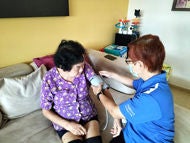
Tapping on SingHealth’s wider ecosystem, EGH is part of SingHealth@Home, the Mobile Inpatient Care@Home programme, which treats patients with acute yet manageable conditions in the comfort of their homes. This is done through a combination of teleconsultations, remote monitoring and home visits by the care teams, which respects patient autonomy and enhances recovery while optimising hospital resources by shifting care appropriately into the community.
Complementing this is Virtual Professional Consultations, which connects EGH and other SingHealth specialists with primary care providers, including family physicians at SingHealth Polyclinics and general practitioners. Through timely, two-way communication, primary care physicians can seek specialist input for clinical queries on their patients. Potentially complex cases can then avoid referrals to the hospital. This streamlines care delivery, strengthens clinical decision-making, and enables earlier interventions, while reinforcing confidence in community-based care. EGH has further extended a similar model as a pilot service to Vanguard Healthcare’s nursing homes, potentially benefitting about 1,300 seniors by supporting the homes’ clinical management to mitigate unnecessary hospital visits.
 The programmable smart watch prototype.
Remote monitoring devices complement clinical consultations by integrating care into patients’ daily routines. For instance, a programmable smartwatch developed by EGH, in collaboration with Changi General Hospital (CGH), has the potential to improve home-based prehabilitation by tracking patients’ exercise movements and progress at home as they prepare for surgery. These tools allow the care team to maintain clinical oversight remotely and enable a more seamless care experience that is both productive and intuitive to individual needs.
Smart Operations for Greater Efficiency and Optimised Resources
Working largely behind the scenes, Smart Operations focuses on enhancing workflow and workforce efficiency through robotics, digitalisation, automation, and AI, enabling faster, more proactive care delivery.

One such initiative is an AI-powered referral system developed by SingHealth Community Hospitals (SCH) that supports patient transfers from the future physical EGH to Eastern Community Hospital (ECH). This system screens referral cases by analysing structured clinical criteria and care needs to generate recommendations for onward transfer from the acute to community hospital setting. For example, a stroke patient who was treated in the Intensive Care Unit (ICU) and is now awake and medically stable. Upon assessment, the system deems the patient suitable to transfer to ECH to undergo rehabilitation.
Hospital staff validate these system recommendations and focus their attention on more complex or ambiguous referrals. This augments, rather than replaces, the traditional manual triaging process, by improving speed and consistency while reducing administrative work. Estimated to save more than 170 manhours each month, the system supports timely referral decision-making across care teams, allowing clinical teams to redirect more attention towards patient care.
More than just enhancing efficiency, such innovations reflect a broader shift towards more adaptive operations, where resources are deployed more intelligently so that care pathways can better meet patient needs.
Smart Infrastructure to Support Advanced Healthcare Delivery
By embedding intelligent systems into its infrastructure from the outset, the EGH Campus lays the foundation for a more agile and future-ready healthcare environment. This includes smart and sustainable features such as systems that track and optimise equipment usage, staff deployment, and patient flow. By improving visibility and coordination, these systems enhance operational fluidity while reducing time spent on manual processes.


Wards in EGH Campus are designed to be flexible and easily convertible to provide additional beds as needs evolve.
The concept of adaptability extends to physical infrastructure such as flexible room designs that allow spaces to be reconfigured and scaled as necessary. In scenarios such as disease outbreaks, clinical and operational teams can activate additional bed spaces quickly or isolate specific areas while maintaining overall operational continuity – a design approach that is sustainable in the long-run while safeguarding both patients and staff.

Members of the public experience a prototype of the phygital healing spaces being developed by EGH Campus and Mandai X.
Beyond functionality, the EGH Campus also reimagines the hospital environment as an integral part of the healing process. In partnership with Mandai X of Mandai Wildlife Group, the campus is co-creating immersive “phygital” (physical and digital) healing spaces that incorporate biophilic elements and curated soundscapes developed by Mandai Wildlife Group. These elements evoke the rhythms of nature and offer moments of calm and respite within a busy hospital setting.
Across all three pillars, the EGH Campus reflects a deliberate shift in how healthcare is designed and delivered – one where technology is introduced not as an add-on, but integrated from the ground up. These innovations are not ends in themselves, but enablers of a more cohesive, refined, and patient-centred system. In doing so, the EGH Campus positions itself not just as a new hospital, but as a long-term blueprint for how healthcare can evolve to meet the needs of the future.
“Digital innovation enables us to deliver more seamless, coordinated care that supports patients beyond the acute clinical setting. Through integrated platforms and data-driven insights, we can strengthen collaboration across healthcare partners, enable smoother care transitions, and better support for patients and caregivers. This allows care to extend meaningfully into the community in tandem with rehabilitation with the goal to achieve patients’ independence and restore quality of life,” shares Associate Professor Lionel Cheng, CEO, SingHealth Community Hospitals.

Stay Healthy The Easy Way

Get trusted health advice, offers and more.
Stay Ahead in Healthcare Industry

Subscribe to our exclusive updates for healthcare professionals.













Keep Healthy With
 HealthXchange
 Health Videos
Follow SingHealth


© 2026 Singapore Health Services Pte Ltd. All Rights Reserved.