



Let us help you find what you’re looking for


16 Jul 2025
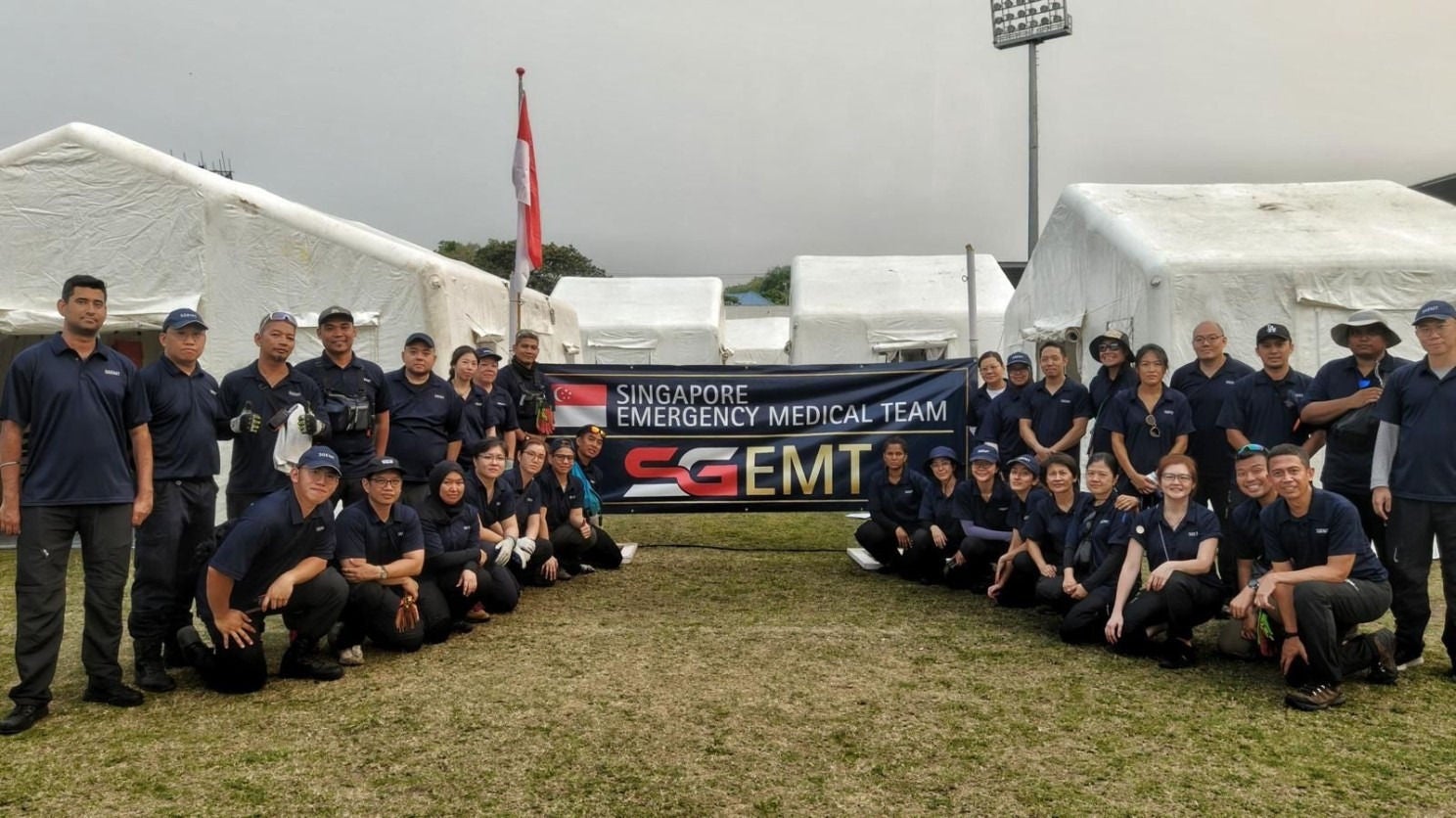
The newly-minted SGEMT team boldly stepped into the aftermath of Myanmar’s devastating earthquake. They share their experiences at the disaster zone.
When a 7.7 magnitude earthquake struck Mandalay, Myanmar’s second-largest city, on 28 March 2025, it left a trail of destruction—homes flattened, hospitals overwhelmed and thousands left stranded, lost, and in need of urgent care.
Within 48 hours of the request for assistance from the The ASEAN Coordinating Centre for Humanitarian Assistance on disaster management (AHA Centre) on 1 April 2025, the Ministry of Health (Singapore) deployed the Singapore Emergency Medical Team (SGEMT) comprising a 34-member team of healthcare professionals, including a 19-member medical team of including doctors, nurses, a physiotherapist, psychologist and more to join rescue efforts.
 And for two intense weeks from 3 to 16 April, the team became the heartbeat of a shattered community as they worked at the heart of the disaster zone, providing aid and offering a sense of hope to the shattered community. They set up a field hospital at Bahtoo Stadium and worked hand-in-hand with local authorities, ensuring vital healthcare reached those who needed it most. SGEMT also worked with ST Engineering to ensure that healthcare workers onsite were equipped with logistical support including the management of water, sanitation and hygiene technologies.
 The birth of SGEMT
Clinical Professor Kee chong Ng, Deputy Group CMB, Disease Outbreak & Preparedness, SingHealth, who spearheads the SGEMT efforts, shared that he is very proud of the team’s performance.
This is especially so as it was their first overseas deployment—since SGEMT was formed in late 2024—and a powerful test to its preparedness and resolve.
The team was set up to build emergency response capabilities and support global or regional disaster efforts. SGEMT is equipped to provide rapid and comprehensive medical care during emergencies. This includes, but is not limited to, emergency services, primary care, as well as maternal and child health outpatient care.
 Development of the SGEMT began in early 2023 and within 18 months was credentialed by World Health Organization in September 2024. After the medical operational plans were set up, team members went through three phases of training: online modules, in-person sessions, and a final ground full deployment exercise. This prepared them to meet the World Health Organization's expected capacity of managing about 100 patients a day over a two-week period under a Type 1 Fixed Emergency Medical Team*.
“In Myanmar, the team saw a total of over 1,800 patients in just a week—much more than the projected 1,400 we were prepared for, and over a shorter period of time,” Clin Prof Ng shared.
Resilience in the face of disaster
Clin Prof Ng was especially heartened by the tenacity the team showed in the face of difficulties.
With roads closed or damaged by the earthquake and multiple change of deployment sites, getting to the disaster relief site took over a day with multiple detours.
The team spent a full day setting up their field hospital, but they were hit by a huge and unexpected thunderstorm which blew away 8 of the 12 tents set up, forcing them to work into the night to rebuild them. During the deployment, the temperatures began to spike, and they ended up working through sweltering heat of 39 degrees Celsius.
 “It was a real test of our grit and teamwork,” admitted Mr Ahmad Khairil Mohamed Jamil, Senior Nurse Manager, Emergency Department, Sengkang General Hospital. The team only had basic equipment to work with, such as a portable ultrasound and ECG machine, which made the situation even more demanding.
 “These challenges pushed us to think out of the box. We had to optimise every available resource at hand. For example, working with the Myanmar Red Cross, we created a simple Q-card system for registration by repurposing cardboard sheets from our medical data sheets into Q-card numbers so that we didn’t miss out any patient. We also had to create consult spaces using canvas sheets and ropes to ensure some level of privacy.”
“The training we underwent helped set expectations and allowed us to bond. We worked in a coordinated, seamless manner, helping one another out. Everyone had a positive attitude and the team spirit remained high throughout,” Dr Patricia Lee, Senior Consultant, Care & Health Integration, Changi General Hospital, chimed in.
A need for mental health care
The SGEMT team went beyond attending to physical earthquake-related injuries like fractures and wounds, to also address the mental health needs of the community.
“The important thing is to not pathologise a normal reaction to an abnormal event,” Dr Evelyn Boon, Senior Principal Psychologist, Singapore General Hospital, explained.
She recounted how one survivor had persistent worries about being left behind during evacuation due to injuries she had sustained. Another survivor, a child, shared her fears about being unable to leave her room for fear of meeting ghosts of those who had died.
Dr Boon emphasised that these reactions are to be expected after a traumatic event. It is essential to help victims understand that their stress responses are a normal part of coping.
 “I educated them on the normal reactions post-crisis, so they know when to seek help. I also taught them simple grounding techniques and sleep interventions to cope,” she said.
Touched by the spirit of Myanmar
Looking back at their Myanmar mission, Dr Boon, Dr Lee and Mr Khairil are in unison that a big factor in keeping them going was the people they met.
“In the face of immense loss, the Burmese carried themselves with such calmness and composure. Many stepped forward to offer help in different ways to make our work smoother,” Dr Boon gratefully recalled.
Particularly memorable for Mr Khairil was befriending a nurse who, despite losing her sister during the earthquake, continued to return to base camp each day to help survivors.
“She did not let the devastation of the earthquake or the heartbreaking loss of her family member stop her. Instead, she chose to step up and serve her people in any way she could. That is what real strength and resilience is,” he said.
 For Dr Lee, the experience was a good reminder of how every little step healthcare providers take, can make significant differences in the lives of people they meet and help.
“We may not be able to cure everyone, but we can always bring comfort. I’m grateful I could contribute, even in a small way,” she affirmed.
For the team, this mission offered more than experience—it offered renewed perspective on the work they do.
*As a type 1 Fixed Facility, SGEMT is expected to provide daylight hours care for acute trauma and non–trauma presentations , referrals and for ongoing investigation or care and community – based care in an outpatient fixed facility; deliver primary healthcare services for basic communicable and non-communicable diseases and basic reproductive health services; and remain self-sufficient and operate in the area of operations for up to 2 weeks and to anticipate additional time for exigencies of service.
Update (7 November 2025): We are proud to announce that SGEMT has been recognised with the prestigious Healthcare Humanity Awards 2025 hosted by MOH Holdings (Singapore) - an honour that speaks to the team's exceptional dedication, team-spirit, and compassionate care under challenging conditions.
Stay Healthy The Easy Way

Get trusted health advice, offers and more.
Stay Ahead in Healthcare Industry

Subscribe to our exclusive updates for healthcare professionals.














Keep Healthy With
 HealthXchange
 Health Videos
Follow SingHealth


© 2026 Singapore Health Services Pte Ltd. All Rights Reserved.