



Let us help you find what you’re looking for


09 Apr 2026
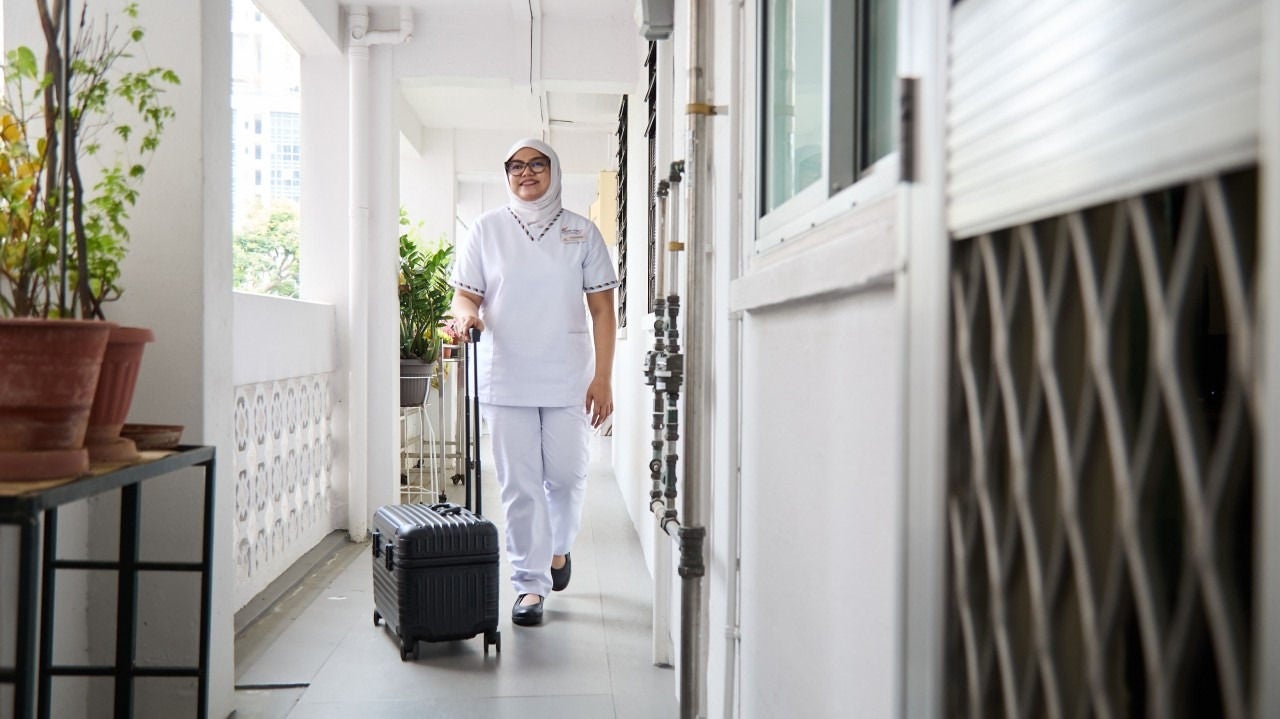
Walk through the void decks of Bedok, the community gardens of Changi, Simei, or the therapeutic spaces at Marine Parade, and you'll witness healthcare being reimagined in the neighbourhoods where 610,000 residents live.
These residents are pioneers in their own way: they are living proof of a radical idea that health is most sustained when we incorporate wellness into communities rather than try to restore it after illness strikes.

In 2025, Healthier EAST @ SG— representing the communities in Bedok, Changi, Marine Parade and Tampines – was included in the World Health Organization's Global Network for Age-Friendly Cities and Communities (GNAFCC). This achievement was led by SingHealth and supported by People's Association and the Ministry of Health (Singapore). SingHealth manages the health of residents staying in the Eastern region of Singapore and works closely with a wide range of partners from different sectors to lead and coordinate care transformations.
Beyond the Hospital Walls
Traditional healthcare operates on a simple premise: treat people when they fall sick in a clinic or hospital. SingHealth, Singapore's largest public healthcare cluster, has turned this model on its head. As the only healthcare cluster with a National Medical Research Council Centre Grant for population health research under Research Innovation and Enterprise 2025, SingHealth is reimagining entire communities as living laboratories for health innovation.
"We have moved beyond providing healthcare services," explains Prof Lee Chien Earn, Deputy Group Chief Executive Officer (Regional Health System), SingHealth. "We're transforming how communities think about and are proactively taking charge of their own health and wellbeing."
The numbers tell a compelling story. Across Bedok, Changi, Marine Parade, and Tampines, more than a quarter of residents in Healthier EAST @ SG are aged 60 and above. In addition to serving an ageing population, we are racing against the clock to create comprehensive and integrated health ecosystems that support residents throughout their entire life journey.

The Science of Community Health
The foundation of this transformative shift is rigorous research to tackle these questions: How do neighbourhood facilities shape how often seniors stay active? What physical changes accompany ageing in the community? How do everyday surroundings either support or hinder healthy habits?
This evidence-based approach, involving over 1,800 seniors over two years from November 2023, has yielded remarkable results.
The Neighbourhood as Laboratory
The WHO's Global Network framework identifies eight essential domains for age-friendly communities. Healthier EAST @ SG addresses all eight through innovative, place-based interventions by looking at the complex interactions between housing, transportation, outdoor spaces, community support, health services, social participation, respect and inclusion, and communication, holistically.
Take the HealthUP! Movement, launched in Tampines in 2021 as a holistic preventive health initiative, for example. Beyond simply encouraging residents to exercise more or eat better, HealthUP! creates a comprehensive support network. It enables residents to reach their health goals through personalised support from SingHealth’s Wellbeing Coordinators. Wellbeing Coordinators offer reminders and facilitate uptake of health screening, lifestyle recommendations and connect residents with a wide range of health and social activities offered by SingHealth and its community partners.
The results speak for themselves: pilot participants showed measurable improvements, with rates of up-to-date age-appropriate chronic disease and cancer screening between 20 – 40% higher than national health screening rates, and 73% of goal-setters attaining at least one of their health goals.
Perhaps the most innovative aspect of the ‘living laboratory’ is the way physical spaces have become therapeutic interventions. Together with partners such as the Changi Simei Grassroots Organisation, Singapore University of Technology and Design, and SAA Architects, underutilised spaces —from community gardens like the Pelatok Art Farm to transit spaces like the Simei MRT Viaduct— have been transformed into vibrant community health hubs.

Pelatok Art Farm
Technology Meets Community
In this living laboratory, high tech solutions seamlessly integrate with grassroots engagement. For example, gamification transforms mundane activities into health-promoting behaviours: NFC sensors placed at staircases convert steps and elevation levels into points that can be exchanged for vouchers, encouraging seniors to choose using stairs over lifts. At fitness trails, wearable devices with NFC technology allow seniors to check in at beacons installed at various checkpoints to accumulate points as they complete their walking circuits.
Elsewhere, pilot programmes use virtual reality technology to help seniors improve their balance before they navigate agility paths, supporting fall prevention. Smart home technologies and wearables also monitor health remotely and gently nudge users to change behaviours.
The EASE (Elderly Activity-Spaces Envelopes) study, the largest community mobility research project in Singapore, uses smartphone data to track movement patterns and inform urban planning decisions. Over 1,100 seniors took part in a comprehensive 14-day study that captured their travel patterns through a mobile app and included fitness assessments and questionnaires This data-driven approach guides policy revisions and urban recommendations to be targeted and senior-friendly.
Co-Design with the Community
The activation of spaces like the Pelatok Art Farm reveals another unique and pivotal element of this living laboratory approach: authentic community engagement. More than 300 residents participated in co-design workshops and surveys. Through a process involving place design, placemaking and place keeping, it translated initiatives into interventions that met actual community needs rather than assumptions about what residents require.
Such spaces combine nature-based interventions with green community-based activities and support to connect individuals (social prescribing) to promote mindfulness, inclusivity, and social bonding residents involved in Pelatok Art Farm reported greater community connection, deeper relationships with nature, and improved emotional wellbeing.
Viasta! – the Changi Simei Viaduct Fiesta – is another initiative that exemplifies this approach. Residents were deeply involved in designing and organising the activities to activate and transform the underutilised space under the Simei MRT Viaduct into a vibrant community space.

Viasta! - The Changi Simei Viaduct Fiesta
Global Recognition, Local Impact
The WHO recognition places Eastern Singapore alongside 1,700 cities and communities across 60 countries, representing over 330 million people worldwide. As a GNAFCC member since April 2025, Healthier EAST @ SG gains access to a global network of knowledge and best practices while contributing its own innovations to international understanding of community-based health approaches.
This didn't happen overnight. For nearly two decades, SingHealth has been building the partnerships and infrastructure necessary to support this comprehensive approach. This accolade is the culmination of years of relationship-building with healthcare providers, community partners, and community care organisations towards a vision that aims to keep residents active and well in their homes.
HealthUP! has expanded from having 200 pilot participants to a SingHealth-wide movement supporting over 190,000 residents, demonstrating its scalability and sustainability. The programme's integration with national initiatives like Healthier SG fosters conversations about community engagement and primary care, so that community-based interventions complement rather than compete with existing healthcare services.

Redefining Healthcare's Future
In transforming neighbourhoods into active and dynamic health innovation hubs, SingHealth isn't just caring for its residents, it is trailblazing a new way forward that puts the focus on ‘health’ back into healthcare that the world is watching, learning from, and beginning to adopt.
Prof Chien Earn Lee shares that the goal extends beyond local impact, it is to ignite a movement on the global front that will inspire new ways of expanding healthy longevity. "The reality is that across the world, life spans are increasing and we want to initiate novel ways to also increase health spans through our evidenced-based interventions in communities. We are excited at the opportunity to trailblaze initiatives that create more inclusive environments locally and potentially transform the way we enhance health and delivery care beyond our shores."
In Eastern Singapore, the future of healthcare is near at hand, where health happens in thriving, connected communities where people call home, and not in hospitals.
Stay Healthy The Easy Way

Get trusted health advice, offers and more.
Stay Ahead in Healthcare Industry

Subscribe to our exclusive updates for healthcare professionals.















Keep Healthy With
 HealthXchange
 Health Videos
Follow SingHealth


© 2026 Singapore Health Services Pte Ltd. All Rights Reserved.