





Let us help you find what you’re looking for


09 Jun 2025
Imagine falling and losing your two front teeth. After visiting the dentist, you learn that you will need to have a series of measurements and adjustments done in order to have dentures made. The whole process will take months, during which you will have to bear with being toothless.
This is a situation Associate Professor Na Yu and her team at National Dental Centre Singapore (NDCS) hope to change with SmartRPD, digital workflow for making dentures.
 Associate Professor Yu Na
Since 2020, NDCS has been partnering A*STAR - Agency for Science, Technology and Research’s Institute of High Performance Computing (IHPC) on the development of SmartRPD. IHPC developed computational geometry algorithms to analyse patient-specific dental scans and generate 3D models of the removable partial dentures (RPD) frameworks. This user-friendly modelling process requires minimal input from dentists, automates customisation and streamlines manufacturing through 3D printing. “Our goal was to develop a dental software that enhances efficiency of custom RPD that will allow dentists to focus on more important tasks,” said Principal Scientist Dr Lim Chi Wan, IHPC.
 Instant mapping ensure design precision
“With SmartRPD, we can digitise patient data and fabricate their dentures using 3D printing,” Yu Na, who is director of Medical Technology at National Dental Centre Singapore (NDCS) and Assistant Professor at Duke-NUS Medical School, explains. Sharing more about her role, Yu Na’s work involves identifying clinical needs to bridge the gap with potential innovations or developments, ensure clinical validation, and navigate pathways for commercialisation and adoption.
The gap in geriatric dentistry
Yu Na explains that SmartRPD was a necessary development because the demand for dentures has increased. This is partly due to Singapore’s rapidly ageing population. Studies have shown that older people over the age of 65 have an average of only 11 teeth. The annual demand for dentures was estimated to be about 40,000 in 2020 and is expected to increase further when 24 per cent of the population reaches the age of 65 by 2030.
The consequences of the loss of teeth can be severe; seniors who can no longer chew properly tend to eat softer, less nutritious food, thereby exacerbating their existing health problems. The loss of teeth can also affect their self-esteem and cause them to shy away from socialising, which may in turn impact their mental well-being.
Timely access to dentures is therefore crucial. However, the traditional method of fabrication is extremely time-consuming. Dental technicians have to make the dentures by hand and patients have to visit the clinic at least three times for adjustments.
“The estimate waiting time we give patients for a full set of dentures to be done is about three or four months. It’s a long time, and you can imagine how disappointed they are when they hear this,” Yu Na exclaims.
A smarter way to fill the need
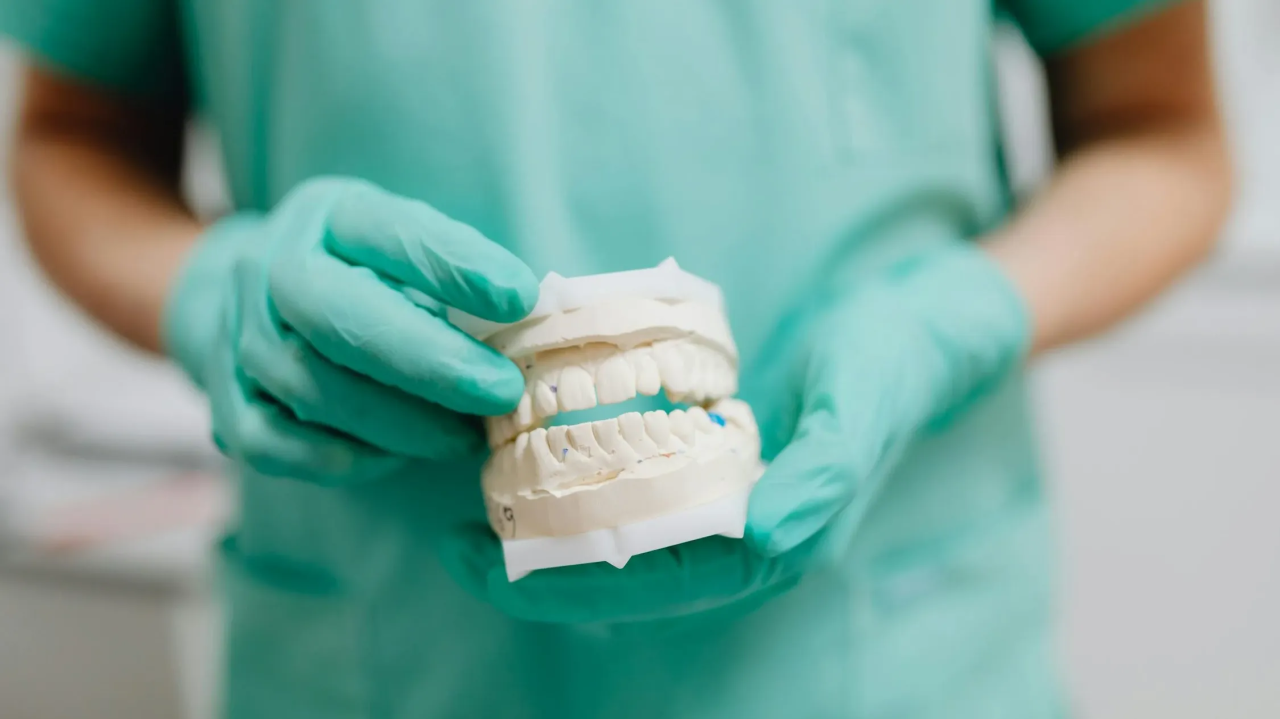
With SmartRPD, the time taken to develop of metal-base removable partial dentures —the metal part which forms the “backbone of dentures”—is shortened from 11 hours to just two, thanks to 3D printing.
An impression of the patient’s mouth is also printed. This model can then be used in the various stages of prosthesis production to check the alignment of the teeth so that the patient does not have to visit the dentist several times.
Importantly, this digital method of scanning and printing dentures is also far more precise. “There are fewer human errors and inaccuracies, and based on our past data, the need to redo or refit dentures has been largely reduced. Patients also report experiencing more comfort using their dentures,” Yu Na shares.
Limitless opportunities of tech in dentistry
What is also noteworthy is that although globally, the use of 3D printing for dentures exist, , Yu Na and team are the first to run a randomised, clinical trial to examine the efficacy of the treatment. She believes that this scientific, evidence-based method will help to increase adoption from clinicians across the industry.
Her team is also going one step further and developing software that can improve the entire dental prosthesis manufacturing workflow. “Currently, our software can use different algorithms to analyse the scan and make suggestions on how we can make the structure more stable,” she explains.
So far, the hardware used to develop the RPD has been validated and is already being used in clinics, while the software is still being refined. The aim is to fully implement the system by the end of 2025.
In the meantime, encouraged by their success, Yu Na and her team are continuing to explore how other parts of the denture manufacturing process, such as the teeth, can be digitised.
“We hope to do use similar technology to do timelier customisation of further dental appliances for our patients,” she says.
In future, she also hopes to study how technology such as artificial intelligence can be used to raise awareness about oral health and make it easier for screenings and diagnosis to be conducted.
“My hope is that with the maturing of this technology we can better address the needs of patients in a timely way,” Yu Na concludes.
Stay Healthy The Easy Way

Get trusted health advice, offers and more.
Stay Ahead in Healthcare Industry

Subscribe to our exclusive updates for healthcare professionals.
















Keep Healthy With
 HealthXchange
 Health Videos
Follow SingHealth


© 2026 Singapore Health Services Pte Ltd. All Rights Reserved.