





Let us help you find what you’re looking for.


Uses
What is Mercaptopurine for?
Mercaptopurine is an anticancer medication used in the treatment of leukemia.
It works by interfering with the deoxyribonucleic acid (DNA) and ribonucleic acid (RNA) production, hence impeding the growth of leukemic cells.
How should I take or use Mercaptopurine?
Mercaptopurine should be taken once daily in the evening, at the same time every day.
Mercaptopurine is available in tablet form.
To maximise absorption of Mercaptopurine, it should preferably be taken on empty stomach, i.e. either 1 hour before or 2 hours after food. However, if gastric discomfort is experienced whilst on Mercaptopurine, it may be taken with food.
Avoid milk or milk products 1 hour before and 2 hours after taking Mercaptopurine as milk products will affect the absorption of Mercaptopurine. Milk or milk products may be consumed at other times of the day.
If dose prescribed is less than one tablet (for e.g. half tablet or quarter tablet), use a tablet-cutter to cut the tablets in a still-air room. If your child is unable to swallow the tablet, soak the tablet in small volume of water and allow it to dissolve before administering the dose.
- Take precautions to avoid cytotoxic exposure: wear gloves and mask when handling the tablets. Please refer to Patient’s Information Leaflet on “Safe Handling of Oral Cytotoxic Medications” for details.
Your doctor may change the dosage of Mercaptopurine depending on blood tests results. Always follow the doctor’s instructions strictly, and record the dose taken daily on the form given to you. Do not stop taking Mercaptopurine unless you are told to do so by your doctor. Do not take more or less than required unless instructed.
What should I do if I forget to take or use Mercaptopurine?
If you forget a dose, take it as soon as you remember. If it is nearer to the time of the next dose, skip the missed dose. Do not take two doses at the same time.
Do not repeat dose if vomiting occurs after dose is administered, wait until the next scheduled dose. Contact the pharmacist or doctor if you repeatedly miss doses due to vomiting.
Side Effects
What are some common side effects of Mercaptopurine?
Possible side effects from Mercaptopurine and their management are listed in the following table. Always inform the doctor if your child experiences any side effects, so that the necessary monitoring may be conducted. Seek immediate medical attention if side effects are serious and urgent (refer to “Management”).
| SIDE EFFECTS | MANAGEMENT | |
|
Low white blood cell counts
White blood cells protect the body by fighting bacteria (germs) that cause infection. When the number of white blood cells is low, your child will be more susceptible to infections and may become very ill from these infections. |
To help prevent infection:
|
Seek medical help immediately if your child experiences any of the following:
|
|
Low platelet counts Platelets are important for blood clotting. With low platelets, your child may bruise or bleed (for e.g. gums or nose) more easily than usual. |
Be safety conscious. Brush teeth gently with a soft-bristled toothbrush. |
|
|
Low red blood cell counts Red blood cell transport oxygen to body cells. Your child may feel tired or lethargic if red blood cell is low. |
Ensure child gets ample rest |
|
|
Liver problems Mild, transient changes to liver function may occur
|
Your doctor will monitor liver function using blood tests during therapy, and make adjustment to the therapy if necessary. In the rare event that yellowing of skin and/ or eye(s), dark coloured urine, pale coloured stools, or pain in the upper stomach occurs, seek medical help immediately. |
|
|
Skin reaction Mild skin rash, hyperpigmentation of skin may occur. |
Avoid excessive exposure to sunlight. Use sunscreen and wear protective clothing i.e. long-sleeved tops. Seek medical help immediately in case of persistent rash or allergic reaction: itchy rash, blistered, peeling skin, swelling in face/ lips/ tongue/ throat, tightness in chest or throat, trouble breathing. |
|
|
Nausea, vomiting, loss of appetite or diarrhea may rarely occur. |
Seek medical help immediately if severe or persistent vomiting or diarrhea occurs. | |
|
Hair loss may rarely occur. |
Use gentle shampoo and soft hairbrush. |
|
Handling
How should I store Mercaptopurine?
- Keep away from children
- Keep in a cool, dry place, away from direct sunlight
- Store at room temperature
- Store the medication in the original container it came in
How do I throw away Mercaptopurine safely?
Please refer to Patient’s Information Leaflet on “Safe Handling of Oral Cytotoxic Medications” for details.
How should I handle Mercaptopurine safely?
Please refer to Patient’s Information Leaflet on “Safe Handling of Oral Cytotoxic Medications” for details.
For more information
What else should I know about Mercaptopurine?
Do not take this medication if your child is allergic to Mercaptopurine.
Do not give your child any other medications or herbal products without consulting your doctor or pharmacist. Some medication or food may reduce Mercaptopurine efficacy, or increase incidence of side effects. These include:
- Blood thinning medications such as Warfarin
- Allopurinol
- Sulfasalazine, Mesalazine
- Live vaccines, such as BCG, MMR and some forms of polio or influenza vaccines
Disclaimer: The list is not exhaustive. When in doubt, please consult the doctor or pharmacist.
Disclaimers
Please take note that the above is not a complete list of all possible side effects. If you have any concerns about your medication or if you have other side effects that you think are caused by this medication, please consult your doctor or pharmacist.
If you take more than the recommended dose, please seek medical advice immediately. The information provided on this page does not replace information from your healthcare professional. Please consult your healthcare professional for more information.
This article is jointly developed by members of the National Medication Information workgroup. The workgroup consists of cluster partners (National Healthcare Group, National University Health System and SingHealth), community pharmacies (Guardian, Unity and Watsons) and Pharmaceutical Society of Singapore. The content does not reflect drug availability and supply information in pharmacies and healthcare institutions. You are advised to check with the respective institutions for such information.
Contributed by
Last Updated on October 2017
Need More Medicine?
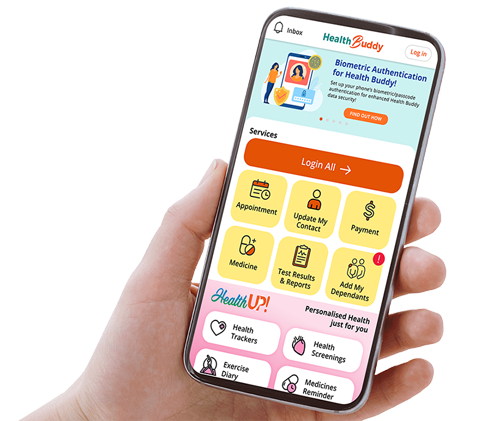
Use Medicine Order Service on HealthBuddy.

Medicines Reminder
Get reminders and chart progress on HealthBuddy.
Related Conditions or Treatments
Related Medicines or Drugs

Health Articles

Stay Healthy The Easy Way

Get trusted health advice, offers and more.
Stay Ahead in Healthcare Industry

Subscribe to our exclusive updates for healthcare professionals.














Keep Healthy With
 HealthXchange
 Health Videos
Follow SingHealth


© 2026 Singapore Health Services Pte Ltd. All Rights Reserved.