SingHealth Institutions will NEVER ask you to transfer money over a call. If in doubt, call the 24/7 ScamShield helpline at 1799, or visit the ScamShield website at www.scamshield.gov.sg.
Using AI and Stem Cells to Personalise Motor Neuron Disease Care
08 Dec 2025
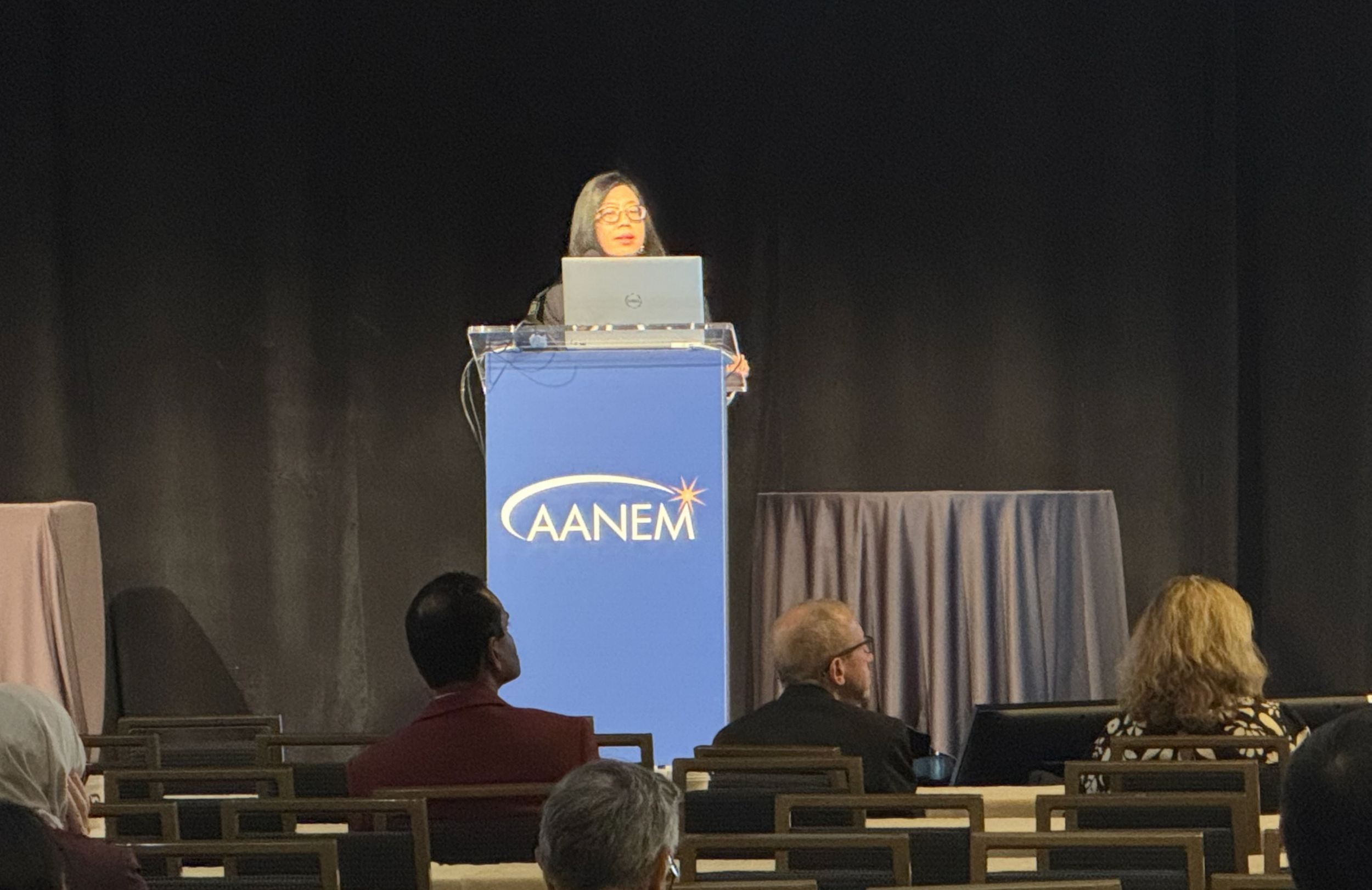
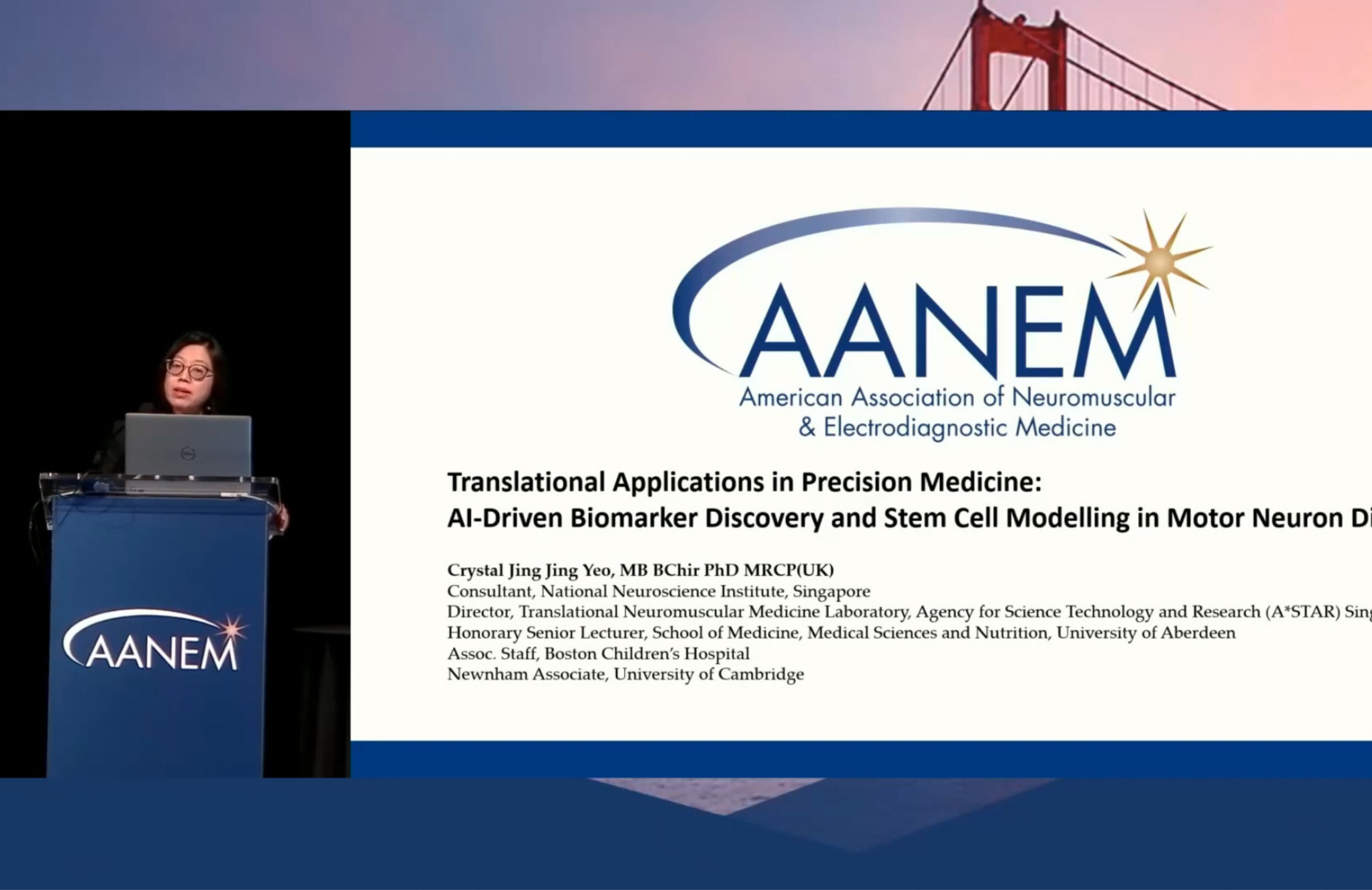
Clinical Assistant Professor Crystal Jing Jing Yeo, Neurology Consultant, NNI@TTSH recently received the Surinderjit Singh Young Lectureship Award by the American Neuromuscular Foundation (ANF) in recognition of her research on neuromuscular conditions.
"How long do I have left?" is a question that many people ask after being diagnosed. It is a question that carries much weight, one that no doctor can answer with absolute certainty, yet those who ask do not want to leave it unanswered.
Amyotrophic Lateral Sclerosis (ALS) is a motor neuron disease, a condition that affects nerve cells in the brain and spinal cord, causing loss of muscle control that gets worse over time. There is currently no treatment to prevent, reverse or stop ALS from progressing. No one size fits all, because the course of ALS varies widely from person to person. New developments in artificial intelligence (AI) are helping to bring greater clarity and hope to this deeply personal journey.
Clin Asst Prof Crystal Yeo, Neurology Consultant, NNI, is using AI to analyse large volumes of patient data to better predict how ALS develops in different people.
This aims to ensure that patients receive the best fit care that is most relevant to their needs and allows them and their loved ones to focus on what matters.
"Every person with ALS has hopes and dreams. For some, it might to attend their daughter's wedding, while for others it might be to make treasured memories with loved ones," says Asst Prof Yeo. "By better predicting how fast the disease will progress, patients and family members can plan, prioritise, and make the best fit decisions that will help them make the most of the time they have."
Her team uses AI to identify the top predictors of ALS progression by pulling together information from multiple sources internationally. This includes blood tests, ALS clinical monitoring scores like those which measure strength and breathing functiom, nerve conduction studies, and the proteins and genes found in damaged motor neurons grown from patients' stem cells. This model, which is still in the trial phase, could help determine how each patient's disease is likely to progress, and group them for treatment to be administered to the best fit group. For example, the model could predict whether a particular patient is likely to have faster decline in breathing, so that patient can be called back for closer monitoring and breathing support.
"It is about finding the right treatment for the right patient at the right time," highlighted Asst Prof Yeo.
AI is not just about prediction, it's also about precision. Her team is also developing AI and computational models to predict which drug or combinations of drugs might work better for different groups of patients by looking at signals in nerves grown from the patients' stem cells. By tailoring the treatment or drugs to the right patients, clinicians may be able to intervene earlier and with greater accuracy.
Targeting the right organ is also important. Spinal muscular atrophy (SMA) is a motor neuron disease with gene therapies currently available. Using stem cell models and -omics, and correlating with findings in patients, Asst Prof Yeo's team has fonud that metabolism and the liver are also affected in SMA. Importantly, these insights help to adapt healthcare screening to individual needs and highlight the necessity to manage SMA holistically, beyond motor neurons alone, for the best fit patient care.
This approach shifts from the traditional "one-size-fits-all" model of care, which often fails to account for the biological and environmental differences that influence how people respond to treatment.
In fact, upon comparing Western and Asian ALS patient groups, including those in Singapore, Asst Prof Yeo noted that ALS can manifest differently among different races, thus highlighting the importance of diversity in research and personalised care strategies. This is one of several neuromuscular research studies Asst Prof Yeo has led, and in recognition of her work, she recently received the Surinderjit Singh Young Leadership Award from the American Neuromuscular Foundation (ANF).
Advances in technology bring personalised, compassionate care closer to those navigating the uncertainties of motor neuron disease - where every patient's journey is guided not only by science, but by hope and understanding. Every patient's experience is different, and research can help to find the best fit treatment and decisions for each patient. We are stepping toward the future, one best fit step at a time.